Bedding & Materials
Latex Sleep Surfaces: Comparing Natural and Organic Options
“Natural latex” and “organic latex” may sound like interchangeable descriptions, but they point to different questions about a material’s origin, processing, and verification. Understanding those distinctions—and how latex is constructed into a mattress or bedding layer—makes it easier to compare comfort, care, and claims without relying on labels alone.
Published November 3, 2026
Latex begins as a milky fluid collected from rubber trees, most commonly Hevea brasiliensis. After harvesting, that fluid can be processed into latex foam: a resilient material used in mattresses, mattress toppers, and other sleep surfaces. Its elastic structure compresses under pressure and springs back, creating a feel that many people describe as buoyant or responsive rather than deeply slow-moving.
That simple origin story, however, does not settle what a bedding label means. “Natural” may describe the source of some or most of the latex, while “organic” makes a claim about agricultural production that must be supported by a relevant certification if consumers are to verify it. Manufacturing methods, blended ingredients, foam construction, covers, and the finished product’s certification scope all matter.
A careful comparison therefore looks beyond the largest words on a product page. It asks: What material is in the core? What does the certification actually cover? How is the latex made? What will the surface feel like, and what care does the finished item require? Those questions apply whether the latex is a thin comfort layer in a mattress or the main component of a topper.
Natural and organic: related, but not identical
Natural latex generally refers to latex derived from rubber-tree sap. In bedding, the term can distinguish tree-based latex from synthetic latex, which is manufactured from petrochemical feedstocks, or from blends containing both natural and synthetic components. Yet “natural” is not, by itself, a precise percentage or a complete account of processing. A product may contain natural latex without being made entirely from it.
Organic latex concerns how the rubber-tree crop was grown and handled under a defined standard. Organic certification typically involves requirements for agricultural inputs, chain-of-custody documentation, and independent assessment. The exact requirements depend on the certification scheme. A label saying “organic” is most informative when it identifies the certifier and makes clear which material or stage of production has been certified.
These terms describe different dimensions. A latex ingredient may be natural in origin but not certified organic. A product may use certified organic latex while also containing other materials—such as fabric, thread, adhesives, or a support layer—that have separate sourcing and certification status. A finished sleep surface should not be assumed to be wholly organic merely because one component is certified.
Nor does a natural or organic claim automatically describe how the foam was manufactured, how it will feel, or how long it will last. Those are separate questions. Reading the material declaration and certification details together provides a clearer picture than treating a single adjective as a complete summary.
What certifications can—and cannot—tell you
Certifications are useful because they can turn broad claims into requirements that are documented and independently checked. Their value depends on the scope: the standard, the specific certified material, the manufacturer or facility involved, and whether the certificate is current. One certification may address agricultural sourcing; another may focus on emissions or chemical content in a finished foam. They are not automatically interchangeable.
When reviewing a certification, look for the name of the standard and the product or component covered. If a label refers only to raw latex, it may not certify the cover or every other part of the mattress. If it refers to a finished product, check whether the listed model and construction match the item being described. A certificate number or a direct reference to a certifier’s database can make verification more straightforward.
Certifications also have limits. They do not tell you whether a mattress will suit your preferred firmness, sleep position, or temperature comfort. They cannot guarantee that a material will be free of every substance a particular person wishes to avoid, unless the applicable standard explicitly addresses that issue. Nor do they replace careful review of care instructions, construction details, or the manufacturer’s warranty terms.
Use labels as evidence about defined criteria, not as a shortcut for judging every aspect of quality. If the language is vague—“eco-friendly,” “green,” or “clean,” for example—seek the specific standard and documentation behind the claim. Where no details are available, treat the wording as an assertion rather than independent verification.
How latex foam is made
Latex foam is commonly made using one of two processes: Dunlop or Talalay. Both convert liquid latex into a foam structure, but they use different production steps. In broad terms, the Dunlop method pours latex into a mold and vulcanizes it, while the Talalay process includes additional steps such as partial filling, vacuum expansion, freezing, and curing. Actual production details vary by manufacturer.
People often encounter simplified descriptions that assign Dunlop a uniformly firmer or denser feel and Talalay a uniformly lighter or springier one. These generalizations may help explain why products can feel different, but they are not dependable rules for choosing a mattress. Firmness and response also depend on the formulation, density, thickness, perforation pattern, layering, cover, and the rest of the mattress construction.
Latex can be formed with holes or channels that influence airflow and flexibility. A mattress may combine layers of different firmness, use latex over another support material, or place a latex topper above an existing mattress. The experience depends on the whole arrangement—not just the name of the foam process or the fact that latex is present.
For a useful comparison, ask for the layer-by-layer construction and the stated material composition. If a product is described as “latex,” clarify whether that means a latex foam core, a latex blend, a latex surface treatment, or simply a component within a larger assembly. Specific descriptions make it easier to compare like with like.
Feel, support, and sleep preferences
Latex often feels resilient: when weight shifts, the material responds relatively quickly. This differs from the slower contouring associated with some memory foams, although no single description captures every formulation. The result can feel gently conforming, buoyant, or firm, depending on the product’s design and the person using it.
Comfort is individual. Side sleepers may focus on pressure relief at the shoulder and hip; back sleepers may pay more attention to how evenly the surface supports the torso; stomach sleepers may prefer a surface that does not allow excessive sinking. These are starting points for evaluating a sleep surface, not medical prescriptions. Body shape, mattress base, personal preference, and the entire bedding system all affect the experience.
Latex toppers can alter the surface feel of an existing mattress, but they cannot necessarily correct a worn or structurally damaged foundation. A thick topper may change how deeply the body settles; a thinner one may make a more subtle difference. Before comparing materials, consider whether the issue is surface softness, pressure, temperature, or a mattress that has lost support. The right response depends on the problem.
When possible, test a comparable construction under realistic conditions and review the trial and return terms before making a decision. A short showroom test may provide an initial impression, but sleeping on a surface at home can reveal more about comfort over time. A product’s certification does not predict whether its firmness or responsiveness will suit a particular sleeper.
Temperature and airflow are system-wide
Latex’s open, elastic structure is often discussed in relation to airflow, but a sleeper’s temperature depends on much more than the core material. The cover, quilting, sheets, room temperature, humidity, bedding layers, and individual physiology all contribute. A thick, insulating cover can change the sensation of a latex surface, while a breathable sheet may support a different experience.
In a warm room, reducing unnecessary layers and choosing bedding appropriate to the season may matter as much as changing the mattress material. In a cool environment, a lighter-feeling surface may not provide the same sense of warmth as a heavily padded one. The goal is not to assume that any one material guarantees a cool night, but to examine the full sleep setup.
For people comparing natural and organic latex, temperature performance should be evaluated separately from sourcing claims. Organic status does not inherently make a surface cooler, and natural origin alone does not reveal the cover’s breathability or the mattress’s overall heat retention. Look for construction information and consider the complete set of layers.
Covers, protectors, and care
Care instructions differ by product, and latex foam should not be assumed to be machine washable. The cover may be removable or fixed; the core may require spot care only; and some components may need protection from direct sunlight, excess moisture, or inappropriate cleaning products. Always follow the manufacturer’s instructions for the specific sleep surface rather than applying a general method to every latex item.
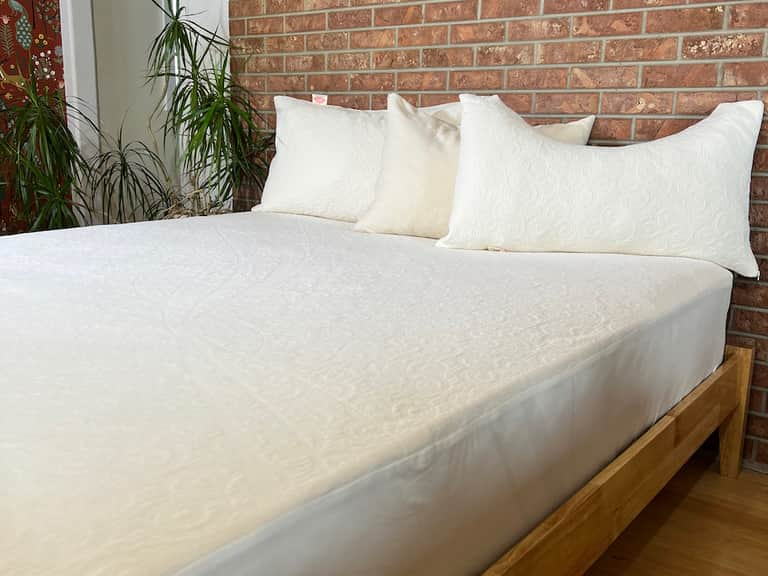
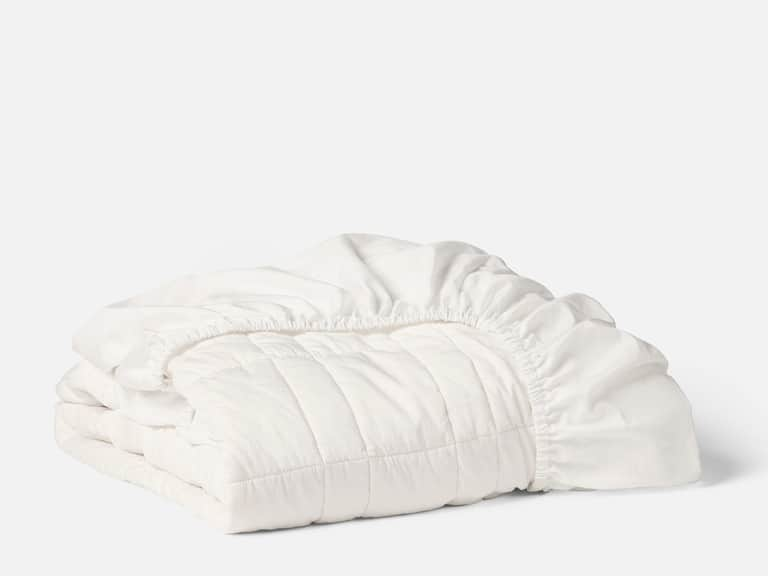
A fitted protector can help limit routine exposure to sweat, dust, and spills. Its own fabric and construction affect the feel of the bed, so a thick or tightly layered protector may change how the surface responds. A simple stretch-knit cotton protector, such as the Suite Sleep Organic Cotton Knit Mattress Protector, is an example of a breathable textile layer intended to fit over a mattress. It is a protector, not a latex surface, and should not be confused with a latex certification or a latex core.
Check protector depth and mattress dimensions before use. A protector that is too tight may strain seams or shift; one that is too loose can bunch beneath the fitted sheet. Follow its separate washing directions, including temperature and drying guidance. Keeping a care record or retaining product labels can be helpful when the materials have specific cleaning requirements.
For households with sensitivities, avoid assuming that “natural” means allergy-proof. Latex allergy is a real concern for some people, and bedding construction and exposure pathways vary. Anyone with a known or suspected latex allergy should seek advice from a qualified healthcare professional and carefully review product disclosures. A certification related to organic sourcing does not establish that a product is suitable for every individual’s health needs.
A practical comparison checklist
When evaluating two latex sleep surfaces, put the claims into a consistent set of questions. This makes it easier to distinguish evidence from marketing language and to focus on the features most likely to affect everyday use.
- Material composition: Is the latex natural, synthetic, or a blend? Are percentages or component descriptions provided?
- Organic claim: Which ingredient is certified, by whom, under what standard, and for which product or stage of production?
- Construction: Is the surface Dunlop, Talalay, or another specified construction? What are the layer thicknesses and arrangement?
- Comfort details: Is firmness described in a useful, consistent way? Are there meaningful details about response, support layers, or intended use?
- Cover and other components: What fabrics, quilting, adhesives, or additional materials are included, and are their claims documented separately?
- Care: Is the cover removable? What can be washed, spot-cleaned, or protected, and what methods should be avoided?
- Fit and setup: Are the dimensions compatible with the mattress, foundation, and fitted sheets already in use?
- Policies: What are the trial, return, warranty, and delivery conditions? Do they apply to the exact model and configuration?
These questions do not produce a universal winner. They help identify which product description is more complete and which differences matter for the intended use. A topper, a full mattress, and a thin protective layer are different kinds of bedding, even when a retailer uses similar material language for all three.
Making sense of sustainability claims
Rubber trees are renewable crops, but a renewable source does not by itself describe the full environmental impact of a finished mattress. The story also includes cultivation, processing, transportation, energy use, manufacturing waste, product lifespan, and what happens at the end of use. A narrow claim about the source of latex should not be mistaken for a complete assessment of a product’s environmental footprint.
Certifications can provide structured information about particular stages or criteria, but they rarely answer every sustainability question at once. Read the scope, identify the certified component, and look for disclosures about the finished construction. Clear, specific documentation is more useful than broad language that cannot be checked.
Durability is another part of the picture. A material that remains usable for longer may reduce the frequency of replacement, but actual lifespan depends on construction, use, care, and conditions. No material should be described as lasting indefinitely. Review the warranty as a statement of covered defects and conditions, not as a guarantee that personal comfort will remain unchanged for the life of the product.
Common misunderstandings
- “Natural” always means pure latex. The term does not necessarily specify the percentage of natural content. Look for a composition statement.
- “Organic” describes the entire mattress. A certification may apply only to a latex ingredient or a particular component. Check the exact scope.
- One foam process is always better. Dunlop and Talalay describe different manufacturing approaches; comfort depends on the complete design and individual preference.
- Certified materials guarantee a perfect fit. Certification addresses defined criteria, not personal comfort, firmness preference, or suitability for every sleeper.
- Latex surfaces never need protection. A core may be resilient, but the finished product can still benefit from appropriate protection and routine care.
- “Natural” means free of allergy concerns. Natural origin does not rule out sensitivity. People with latex allergies should take specific precautions.
The most useful comparison is the most specific one
Natural and organic latex are not competing descriptions of exactly the same thing. One points primarily to source; the other makes a claim about certified agricultural production. Neither word alone explains the foam’s construction, the materials around it, its feel, or how it should be maintained. Those details emerge only when labels are read alongside product specifications and certification records.
Start with the purpose of the sleep surface: changing a mattress’s feel, adding a resilient comfort layer, or understanding the materials already in a bed. Then compare composition, construction, certification scope, and care requirements. Consider comfort as a personal question and sustainability as a matter of documented, specific evidence—not a promise carried by a single label.
With those distinctions in view, latex bedding becomes easier to assess. The language on the label is a beginning, not the whole story; the clearest picture comes from connecting origin, processing, construction, and everyday use.
Frequently asked questions
Is natural latex the same as organic latex?
No. Natural latex describes material derived from rubber-tree sap, while organic latex refers to agricultural sourcing verified under a particular standard. A product can be natural without being certified organic, and certification may cover only a component.
Does organic certification mean a latex mattress is chemical-free?
Not necessarily. Certification has a defined scope and set of requirements; it should not be interpreted as proof that every component is free of every chemical or that the product meets criteria not included in that standard. Review the certifier, standard, and certified component.
Are Dunlop and Talalay latex easy to distinguish by feel?
They are different production methods, but the resulting feel cannot be reliably predicted from the process name alone. Formulation, density, thickness, layering, and the mattress cover all influence the finished surface.
Can latex bedding be washed?
Care varies. Some covers may be removable and washable, while latex foam cores commonly require different handling. Follow the instructions for the specific product and avoid soaking or machine-washing components unless the manufacturer expressly allows it.